Queensland Seller Disclosure Laws: What the Industry Has Learned Seven Months On
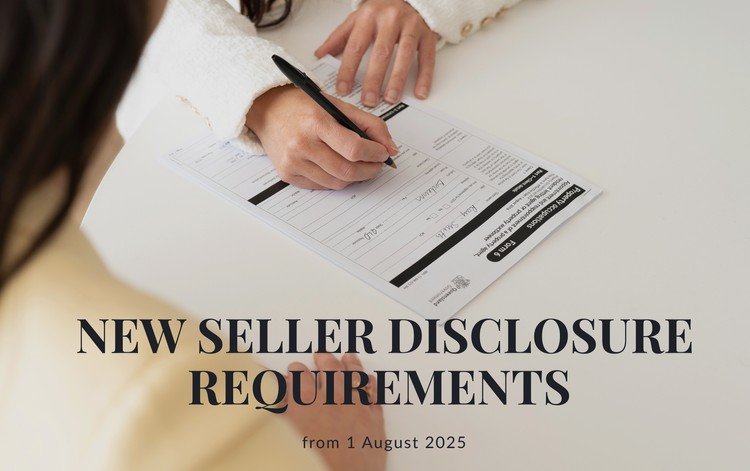
Seven months after Queensland's mandatory seller disclosure laws took effect, the industry is learning lessons that go well beyond Form 2 compliance. From a little-discussed buyer termination risk to the disclosure gaps that matter most in Far North Queensland, here is what agents and their clients need to understand in 2026.
Queensland's mandatory seller disclosure regime has now been operating for seven months. What seemed like a straightforward compliance reform in August 2025 has revealed a more complicated reality — one that is reshaping how agents operate, creating unexpected legal risks, and leaving a critical gap that many buyers and agents still don't fully understand.
What the First Seven Months Have Revealed
When the Property Law Act 2023 disclosure requirements commenced on 1 August 2025, the industry was focused on getting Form 2 right and meeting certificate deadlines. By March 2026, a more nuanced picture has emerged. The early challenges were procedural. The current challenges are strategic.
The Real Estate Institute of Queensland (REIQ) has documented several pressure points that were not apparent before implementation. The most significant is a timing problem that disproportionately affects regional Queensland. Certificate requests to local councils, the Department of Environment and Science, and infrastructure authorities can take anywhere from a few days to several weeks — and in some parts of Far North Queensland, longer. Agents in Cairns, the Tablelands, and across the Cape are spending substantially more administrative time assembling disclosure packages than their counterparts in South-East Queensland, where search infrastructure is more centralised.
REIQ CEO Antonia Mercorella has been direct about this: Queensland lacks the statewide search tools that other jurisdictions take for granted. The burden falls unevenly, and regional vendors are paying more — in both time and money — to meet obligations that apply identically to a unit in Brisbane and a 40-hectare lifestyle block in the Atherton Tablelands.
The Risk That Nobody Is Talking About
There is a dimension of the new regime that is receiving little public attention but is emerging as a serious concern in legal circles: Form 2 is becoming a contract termination tool.
Under the Property Law Act 2023, a buyer can terminate a contract at any time before settlement if the disclosure statement contains inaccurate or incomplete material information. This is not confined to deliberate misrepresentation — an oversight, an attached certificate with an outdated date, or an encumbrance that was not discovered before signing can all potentially provide grounds for termination.
Buyers' solicitors, particularly in contested or cooling markets, are reviewing Form 2 documents with far more scrutiny than the legislation's framers may have anticipated. The right to terminate is broad, and in situations where a buyer has changed their mind or found a better opportunity, a technical disclosure deficiency is a legally clean exit route.
This has material implications for agents. Preparation errors are not merely administrative problems — they can unwind settled contracts and expose agents to client disputes. Meticulous accuracy, complete attachment checklists, and timestamped, auditable delivery records are no longer best practice. They are basic risk management.
The FNQ-Specific Complexity
Rural, lifestyle, and semi-rural properties in Far North Queensland present disclosure challenges that are largely absent from metropolitan practice. Properties with water allocations, rural water licences, government infrastructure easements, registered oral agreements over access, or heritage overlays require sellers — and their agents — to navigate a disclosure landscape that is considerably more complex than a standard residential sale.
Environmental Protection Act notices, QBCC building orders, and Planning Act designations must all be identified and included where relevant. For a property with a long ownership history, unregistered encumbrances — particularly informal access arrangements — can be difficult to identify and easy to inadvertently omit.
There is also a practical challenge in relation to infrastructure access rights. Properties near utility corridors, water board infrastructure, or road reserves in rural FNQ may carry statutory encumbrances that require specific disclosure. Agents unfamiliar with the particular property's history risk preparing technically deficient statements that expose their clients to post-contract termination risk.
What Disclosure Still Does Not Cover — and Why That Matters Here
A common and dangerous misunderstanding in the market is the assumption that Form 2 disclosure provides comprehensive due diligence. It does not.
Several categories of information that are highly relevant to property buyers in North Queensland remain entirely outside the disclosure framework:
- Flooding history and flood risk — Queensland's disclosure regime does not require sellers to disclose whether a property has flooded, its proximity to flood-prone areas, or its classification under local government flood mapping. In a region where cyclonic rainfall and seasonal flooding can significantly affect property value and insurability, this remains a matter of buyer enquiry and independent research.
- Structural soundness and building condition — Pest inspections, building condition reports, and verification of building approvals for structures on the property are not part of the disclosure package. Buyers who assume Form 2 signals structural integrity are mistaken.
- Known defects — Unlike New South Wales and Victoria, Queensland still does not require sellers to disclose known defects. Disclosure is focused on legal and statutory attributes of the title, not the physical condition of the dwelling.
For buyers relying on Form 2 as a comprehensive risk document, this gap is significant. For agents, it represents a clear client education responsibility — particularly for buyers relocating from interstate, where disclosure regimes may cover different categories of information.
How Top Agents Are Adapting
Seven months in, a clear operational divide has emerged. Agents who invested early in compliant digital workflows — using secure, timestamped delivery platforms with full audit trails — have navigated the new environment with considerably less friction than those relying on email-based PDF distribution.
The REIQ's partnership with Securexchange to develop the Realworks Seller Disclosure Tool has provided a structured pathway for Form 2 preparation, but uptake has been uneven, particularly in regional markets where technology adoption in agency practice has historically lagged.
The agents managing this well share several habits: they initiate disclosure preparation at listing stage rather than at offer stage, they maintain written seller authority for Form 2 preparation, they build checklist-based workflows that verify every mandatory attachment before issue, and they price their disclosure preparation services transparently in their Form 6 agency appointment. Agents who have absorbed Form 2 preparation costs without disclosure, or who are charging inconsistently, are generating client friction that affects post-sale relationships and referral pipelines.
What to Watch in the Months Ahead
The Queensland Government has signalled ongoing review of the disclosure regime's operational impact, with particular attention to auction complexity and the regional infrastructure gap. REIQ continues to advocate for a centralised statewide property information portal — a reform that, if implemented, would substantially reduce the compliance burden for regional agents and vendors.
For buyers and sellers transacting in North Queensland in 2026, the practical guidance is straightforward. Sellers should begin disclosure preparation early — weeks before any anticipated contract — and should engage their agent and, where properties are complex, their solicitor in a coordinated process. Buyers should treat Form 2 as a starting point for due diligence, not a conclusion, and should commission independent building, pest, and flood risk assessments regardless of what the disclosure statement contains.
The framework is in place. Understanding its limits, as much as its requirements, is where the real compliance intelligence lies.
Sources: Real Estate Institute of Queensland — Seller Disclosure Hub and Media Releases (2025–26); Queensland Government — Property Law Act 2023 and Seller Disclosure Scheme; Parker Law QLD — Seller Disclosure Analysis; Thomson Reuters — Queensland Disclosure Regime Commentary; Securexchange — Industry Year in Review 2025; Holding Redlich — Queensland Property Law Act Briefing.