New Property vs Established Property: The Australian Tax Difference Every Investor Needs to Understand
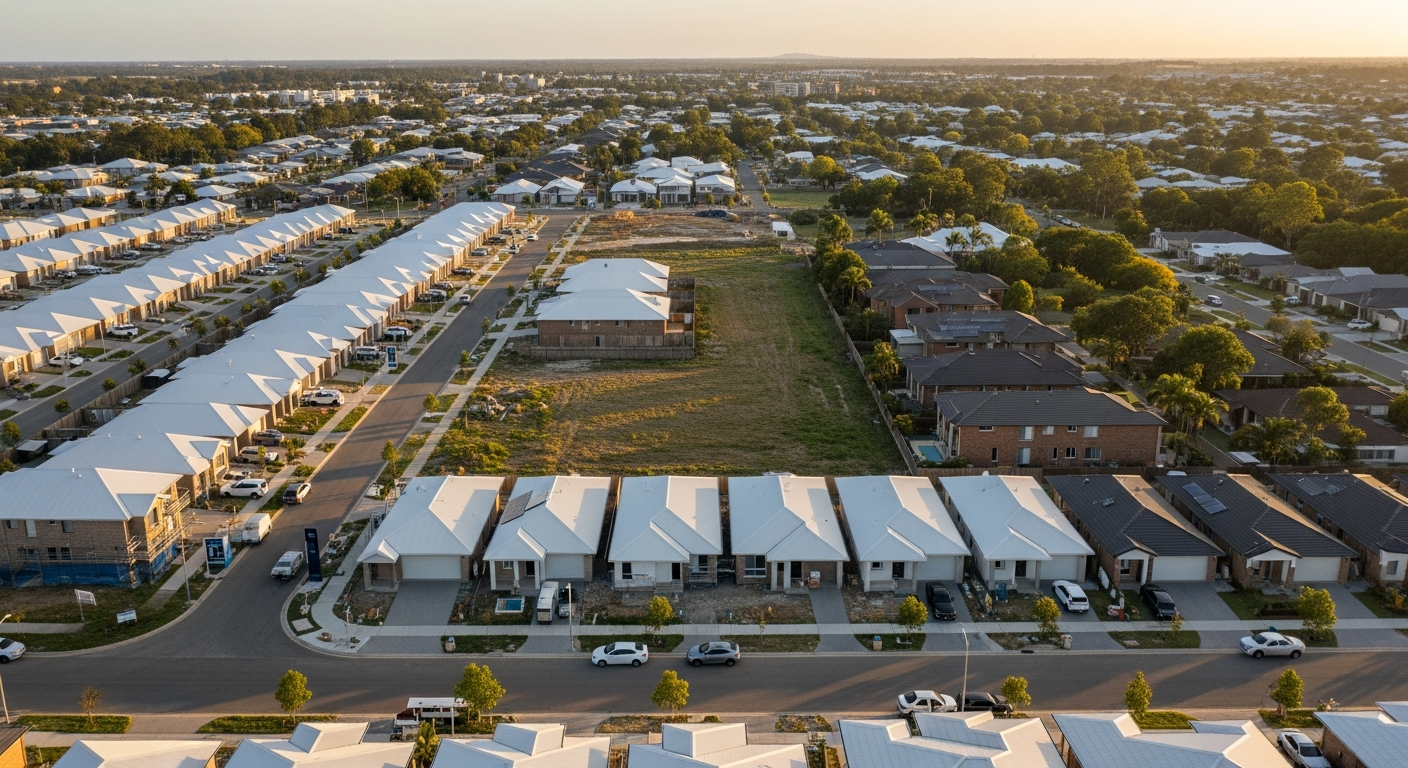
The Australian tax treatment of new and established investment properties differs in four significant ways. Understanding these differences — and the announced Budget 2026 changes — matters before you commit capital.
When an Australian investor or a foreign buyer compares a brand-new apartment with an established one in the same suburb, the asking prices are often similar. The after-tax economics can be materially different. The Australian tax framework treats new and established residential investment property differently across four areas: depreciation on assets inside the property, the capital works deduction on the building itself, negative gearing treatment, and capital gains tax on disposal. The 2026–27 Federal Budget announced changes to negative gearing and CGT, now enacted as law effective 1 July 2027. Those announced changes widen the gap between new and established property for investors who purchase after Budget night.
Why the distinction exists
The policy intent behind these differences is housing supply. Australian government incentives — both existing and announced — are predominantly aimed at encouraging the construction of new dwellings, not at improving returns on the existing stock. The ATO's depreciation rules, Treasury's announced negative gearing reforms, and the build-to-rent tax concessions all reflect this logic. Understanding that framing helps investors read the rules accurately: these are not general tax breaks for property investment. They are targeted supports for new supply.
Foreign investor access: established dwellings are restricted
For foreign persons — defined under the Foreign Acquisitions and Takeovers Act 1975 — the distinction between new and established property is not merely a tax question. It is a question of legal access. From 1 April 2025 the Government implemented a temporary ban on foreign persons purchasing established dwellings; Budget 2026 extended that temporary ban so it runs until 30 June 2029 (limited exceptions apply)., with limited exceptions including properties being redeveloped to increase housing stock. The rules are administered by the Foreign Investment Review Board and confirmed at foreigninvestment.gov.au.
New dwellings — properties that have not previously been sold as a residence and have not been lived in — are generally available to foreign buyers with FIRB approval. For any international investor, the new-versus-established question is a prerequisite before any tax analysis begins.
Depreciation on plant and equipment
Both new and established rental properties contain depreciating assets: air conditioning units, hot water systems, dishwashers, blinds, carpet. Under Division 40 of the Income Tax Assessment Act 1997, the decline in value of such assets is generally deductible against rental income.
The critical difference is who can claim it. For established residential properties acquired after 9 May 2017, investors cannot claim depreciation on second-hand depreciating assets that were in the property at the time of purchase. The ATO treats those assets as having no remaining depreciable value for the new owner. The rule is set out in the ATO's guidance on rental property depreciation.
For a brand-new property, all depreciating assets are first-hand. The investor can claim the full decline in value from the date the property is first available for rent, calculated using either the prime cost or diminishing value method per the ATO's effective life schedules. In practical terms, new properties generally produce higher depreciation deductions in the early years of ownership than equivalent established properties.
Capital works deduction (the building write-off)
The capital works deduction under Division 43 of the Income Tax Assessment Act 1997 allows investors to claim 2.5% of eligible construction costs per year over 40 years. This applies to residential rental properties — new and established — provided the original construction commenced after 16 September 1987 and the investor has access to construction cost records or a quantity surveyor's report.
The practical advantage of new property here is documentation, not entitlement. For a newly constructed dwelling, the developer's records establish the construction cost directly. For an established dwelling, the investor must commission a quantity surveyor to estimate the original construction cost of a building that may be decades old — and the depreciable base may be lower, or records insufficient to support the full claim. The ATO requires that capital works deductions be based on actual construction costs, not current market value.
Negative gearing: current rules and the Budget 2026 announcement
Under current law, rental losses — where allowable deductions exceed rental income — can be offset against any other assessable income, including salary and wages. This applies to both new and established residential investment properties. The ATO sets out the applicable rules in its rental property guide and related tax rulings.
The 2026–27 Federal Budget announced a change to this treatment for established residential properties. According to Treasury's Budget 2026 materials, properties purchased after 12 May 2026 — Budget night — would, from 1 July 2027, only be permitted to offset rental losses against residential property income or capital gains. Losses unable to be applied in a given year would be carried forward indefinitely. Properties purchased before Budget night are grandfathered: those holdings retain access to the current treatment.
New residential builds are explicitly excluded from the restriction. Budget 2026 announced that new construction would continue to receive the current negative gearing treatment — losses offsetting any income — after 1 July 2027. This is the most significant announced tax distinction between the two property categories.
These measures were announced in Budget 2026 and have been enacted as the Treasury Laws Amendment (Tax Reform No. 1) Act 2026 (Royal Assent 26 June 2026). Key provisions commence at different times and the negative gearing/CGT changes first apply in the 2027‑28 income year — see the Act for commencement and application details.
Capital gains tax: current rules and the Budget 2026 announcement
Under current law, Australian resident individuals who hold a rental property for more than 12 months are eligible for the 50% CGT discount on any taxable capital gain on disposal. This applies to both new and established residential properties. Foreign residents are generally not eligible for the 50% discount on taxable Australian property — the ATO's CGT guidance sets out the applicable rules for foreign residents.
Budget 2026 announced changes to CGT treatment for assets acquired after 1 July 2027:
- The 50% discount would be replaced by CPI indexation of the cost base, combined with a 30% minimum tax on net capital gains.
- New residential builds would be offered a choice: apply the new CPI-indexed method, or retain access to the 50% discount. This flexibility is a deliberate supply-side concession for new construction.
- Established residential properties acquired after 1 July 2027 would be subject to the new indexed method only — no choice of the 50% discount.
- Assets acquired before 1 July 2027 — new or established — would be grandfathered under current CGT rules.
The practical outcomes of the new method depend on future inflation and individual holding periods, both of which are unknowable at the time of purchase. What the announcement creates is a structural advantage for new builds acquired after the proposed implementation date over established properties acquired at the same time.
These are announced changes now enacted as law. Independent tax advice should be obtained before any transaction premised on this treatment applying.
The build-to-rent supply-side incentive
Separately, Budget 2026 confirmed tax concessions for eligible build-to-rent developments: a capital works deduction rate of 4% per year (compared with the standard 2.5%), and a reduction in the managed investment trust withholding tax rate from 30% to 15% for eligible fund distributions. These concessions apply at the development level — to qualifying BTR projects meeting statutory eligibility criteria — not to individual investors purchasing residential property directly. Individual investors may access BTR exposure through listed or unlisted property funds, managed investment trusts, or through SMSF fund investments subject to eligibility and the fund's documented investment strategy. ATO guidance on BTR tax incentives is published at ato.gov.au.
Other acquisition costs
Beyond income tax treatment, several acquisition costs apply regardless of whether a property is new or established, but their structure can differ:
- Stamp duty / transfer duty: Some states offer off-the-plan concessions on new dwellings. Availability and size vary by state and buyer type. Current concession schedules are published by each state revenue office.
- Foreign buyer surcharges: In most states, foreign persons pay an additional surcharge on stamp duty: NSW (9%), VIC (8%), QLD (8% AFAD), WA (7%), with SA, TAS, ACT and NT each operating their own structure. These surcharges apply at the time of purchase on the dutiable value of the transaction, for both new and established property. Current rates should be verified with the relevant state revenue office before exchange.
- Land tax: Levied annually by state and territory governments on the unimproved value of land above threshold. Some states apply a separate foreign person surcharge. Land tax rules operate independently of whether the dwelling is new or established.
- FIRB application fees: Foreign persons are required to pay a fee when lodging an FIRB application. The fee schedule is published and updated at foreigninvestment.gov.au.
A reference summary
The table below summarises the principal differences. It is a general guide only — individual outcomes depend on residency status, ownership structure, holding period, and the specific property and state.
| Area | New property | Established property |
|---|---|---|
| Foreign investor access | Generally allowed with FIRB approval | Generally prohibited 1 Apr 2025 – 31 Mar 2027 (exceptions apply) |
| Depreciation on plant & equipment | Full claim from first use | Second-hand assets generally not deductible (post-9 May 2017 acquisitions) |
| Capital works (building write-off) | 2.5% p.a. — typically well-documented | 2.5% p.a. — requires records or quantity surveyor report |
| Negative gearing — current law | Losses offset any assessable income | Losses offset any assessable income |
| Negative gearing — announced from 1 Jul 2027 | Continues to offset any income | Post-Budget night purchases: losses offset residential property income or gains only |
| CGT discount — current law | 50% discount for 12+ month hold (Australian residents) | 50% discount for 12+ month hold (Australian residents) |
| CGT treatment — announced from 1 Jul 2027 | Choice: 50% discount or CPI indexation + 30% minimum tax | CPI indexation + 30% minimum tax (no choice of 50% discount) |
Tracy Steinhardt works with domestic and international investors across new and established property in Queensland and nationally. For enquiries about how these rules apply to a specific situation, contact Steinhardt Property & Business at thesteinhardtgroup.com.au.