NDIS Specialist Disability Accommodation: What Investors Need to Know
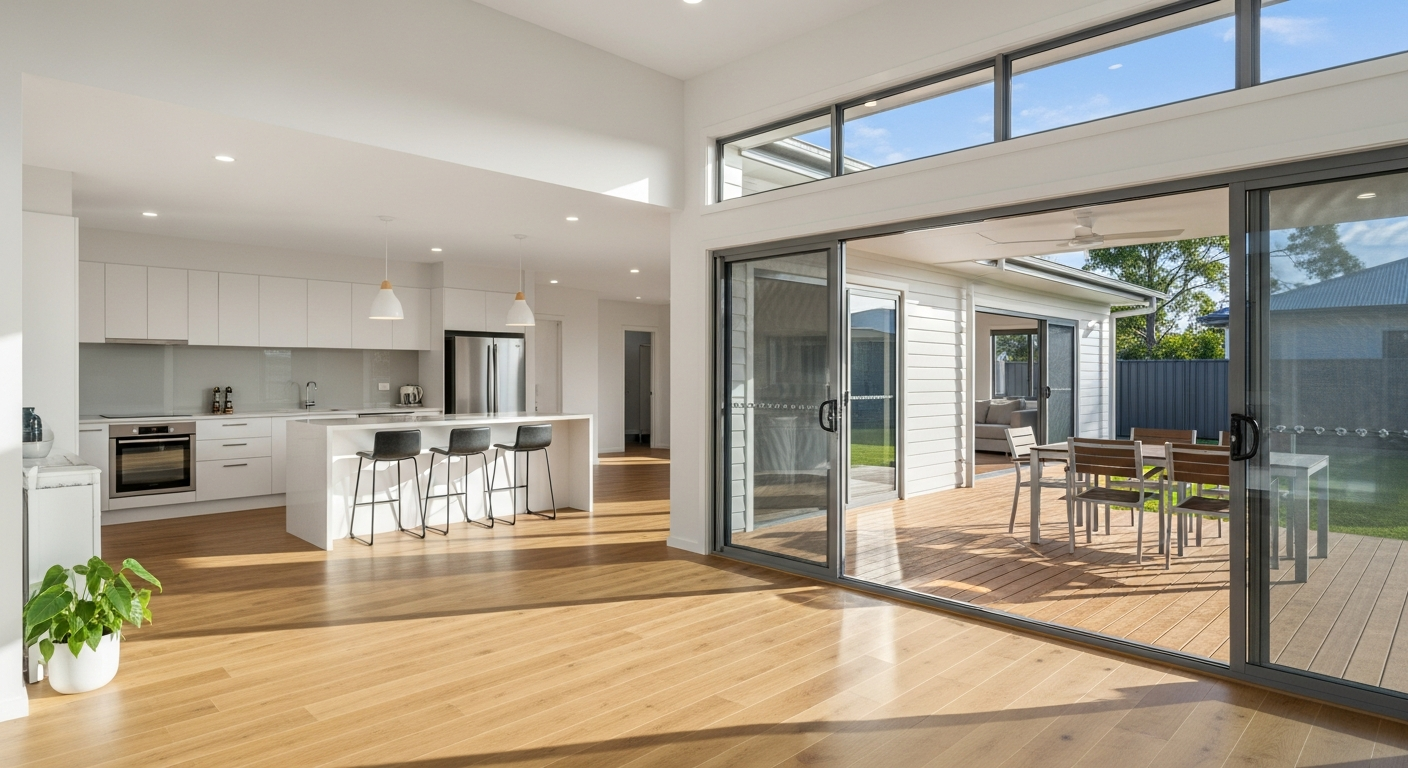
Specialist Disability Accommodation is a government-funded housing category within the NDIS that targets people with extreme functional impairment. The yields are materially higher than standard residential investment — but the eligibility requirements, design standards, enrolment process, and vacancy risks are specific and not well understood by most investors.
Specialist Disability Accommodation, known as SDA, is a category of housing within the National Disability Insurance Scheme (NDIS) that is funded by the Australian Government for NDIS participants with extreme functional impairment or very high support needs. The funding is paid directly to the SDA dwelling provider — typically the property investor or a registered entity managing the property on their behalf — and it is separate from the support services funding that pays for carers and daily living assistance.
SDA yields are substantially higher than standard residential rental yields. Published SDA Price Guide data from the NDIS Quality and Safeguards Commission shows gross yields of 8% to 15% or more for certain dwelling types in certain locations, compared to typical gross residential yields of 3% to 5% in major Australian markets. This yield premium reflects the specialised nature of the housing, the design requirements, the government funding source, and the targeting of a tenant cohort with very high support needs.
This guide explains how SDA works, who is eligible to live in SDA housing, what design categories exist, how the funding is structured, and what the realistic risks are for investors considering this asset class.
How SDA Funding Works
SDA funding is paid to the registered SDA provider — the entity that owns or manages the dwelling and has enrolled it as SDA with the NDIS. The funding is not paid to the tenant; it is paid directly to the provider on behalf of NDIS participants who are approved for SDA support as part of their individual NDIS plan.
The amount paid is determined by the NDIS SDA Price Guide, which sets out funding amounts by dwelling type (apartment, villa/townhouse, house, robust house), design category, location (remoteness classification), and the number of residents. The SDA Price Guide is reviewed annually by the NDIS. Published rates as at 2024–25 indicate annual SDA funding payments ranging from approximately $20,000 to $100,000 per resident per annum depending on design category and location, with High Physical Support dwellings attracting the highest rates.
Because the funding source is the Australian Government (through the NDIS), SDA provides a degree of income certainty that differs from standard market residential tenancy. The tenant's ability to pay is not the relevant question — the NDIS funding is either approved in the participant's plan or it is not.
SDA Design Categories
The NDIS recognises four SDA design categories, each corresponding to a different level of functional support built into the dwelling. The design category determines the funding amount payable and the type of participant eligible to occupy the dwelling.
High Physical Support (HPS) is the highest-funded category. HPS dwellings are designed for participants with significant physical disability who require ceiling hoists, wider doorways, height-adjustable kitchen benches, and reinforced ceiling structures for overhead tracking. These dwellings are purpose-built and cannot be an existing standard residential property that has been retrofitted in a minor way.
Fully Accessible (FA) dwellings are designed for participants with significant physical disability who need a fully accessible living environment but do not require the ceiling hoist infrastructure of HPS. FA dwellings must meet stringent accessibility standards including step-free access throughout, accessible bathrooms, and specific door width requirements.
Robust dwellings are designed for participants whose behaviour may put standard housing at risk of damage — participants with complex behaviour support needs. Robust dwellings feature reinforced walls, secured windows, and durable fittings designed to withstand significant impact. They are typically smaller structures or purpose-built houses rather than multi-unit developments.
Improved Liveability (IL) is the entry-level SDA design category, targeting participants with sensory, intellectual, or cognitive disabilities. IL dwellings must meet minimum design standards but are closer to standard residential specifications than the other categories. Consequently, they attract the lowest SDA funding rates.
Investors considering SDA should understand that the design category is established at the point of dwelling enrolment and cannot easily be changed after construction. Building an HPS-compliant dwelling to attract HPS funding rates requires the dwelling to meet all HPS technical standards at the time of enrolment inspection.
Who Lives in SDA Housing
As at December 2024, the NDIS reported approximately 28,000 participants approved for SDA funding in their NDIS plans. This is a small cohort relative to the total NDIS participant population, and not all SDA-approved participants are actively seeking SDA housing at any given time — some are in alternative accommodation arrangements.
The NDIS has published data indicating that there is a shortage of SDA dwellings in certain categories and certain locations — particularly HPS and Robust dwellings in metropolitan areas and regional centres. This is the market gap that creates investment opportunity. However, the NDIS has also increased the supply of SDA dwellings significantly since 2019, and in some locations and categories, supply has grown faster than the number of matched participants. Vacancy risk is real and varies significantly by location and dwelling type.
The SDA Enrolment Process
A dwelling must be formally enrolled with the NDIS Quality and Safeguards Commission as SDA before SDA funding can be paid. Enrolment is not automatic — it is an application process that requires the dwelling to be inspected and certified as meeting the relevant design standard for the claimed category.
The enrolment process involves:
- Design certification — before construction commences, the dwelling design must be certified by an accredited SDA assessor as meeting the relevant category standards. This is done at the design/plans stage, not post-construction
- As-built certification — after construction is complete, the dwelling must be inspected and certified as having been built in accordance with the certified design
- NDIS enrolment application — the registered SDA provider submits an enrolment application to the NDIA (National Disability Insurance Agency), including the design certification, as-built certification, and property details
- NDIS enrolment approval — once approved, the dwelling is listed in the NDIS SDA register and is eligible to receive SDA funding for each resident who is matched to the dwelling
The dwelling must be registered in the name of a registered SDA provider. Individual property investors who wish to retain the SDA dwelling personally (rather than through a corporate structure) must themselves become registered SDA providers with the NDIS Quality and Safeguards Commission, or they must engage a registered SDA provider manager to operate the dwelling on their behalf — similar to a specialist property management arrangement.
The Yield Profile in Practice
Published SDA Price Guide rates represent the maximum funding amount payable for each dwelling configuration. Whether the investor receives close to the maximum rate depends on: the design category achieved, the location classification, the number of residents (most SDA dwellings house one or two residents, with shared dwellings housing up to five), and the terms of any management agreement with the SDA provider.
Where an investor engages a specialist SDA manager, the manager typically takes a management fee of 10% to 15% of gross SDA income. This is higher than standard residential property management fees, reflecting the additional compliance and support coordination obligations of an SDA provider.
Vacancy is the primary risk to the yield model. Unlike standard residential tenancy, where a vacant property can be re-let quickly in most markets, matching an SDA dwelling to a participant requires NDIS plan approval for SDA, participant assessment of the dwelling's suitability, and sometimes a lengthy process of support coordination. An unoccupied SDA dwelling generates no SDA income. In markets where supply and demand are well-matched, vacancy periods are short. In oversupplied categories or locations, vacancy periods can be extended.
Is SDA Suitable for Every Investor?
SDA investment is not a standard residential investment strategy. The minimum capital requirements are higher (HPS and Robust dwellings are more expensive to build than standard apartments), the management is more complex, the enrolment process is lengthy, and the liquidity of SDA-specific dwellings in the resale market is more limited than standard residential property.
SDA is most suited to investors who: have sufficient capital to fund purpose-built construction or acquire purpose-built completed SDA stock; have a longer investment horizon (5 to 10 years or more); are comfortable with a specialist property management arrangement; and are prepared for the possibility of extended vacancy periods if the local SDA market changes.
For investors who match this profile, SDA offers a yield premium over standard residential investment that is backed by government funding — a combination that is unusual in Australian investment markets. The NDIS is a legislated federal scheme, and SDA funding is a statutory entitlement for eligible participants, providing a degree of income security that standard market residential tenancy does not.
Key Government Sources
- NDIS SDA Price Guide — ndis.gov.au (published annually by the NDIA)
- NDIS Quality and Safeguards Commission — SDA enrolment — ndiscommission.gov.au
- NDIS SDA data reports — quarterly market data on SDA supply, demand, and vacancy — ndis.gov.au/providers/housing-and-living-supports-and-services/specialist-disability-accommodation
- National Disability Insurance Scheme Act 2013 (Cth) — legislation.gov.au
- SDA Design Standard — published by the NDIA, available at ndis.gov.au