Build-to-Rent in Australia: What the 2026 Tax Incentives Actually Mean for Investors
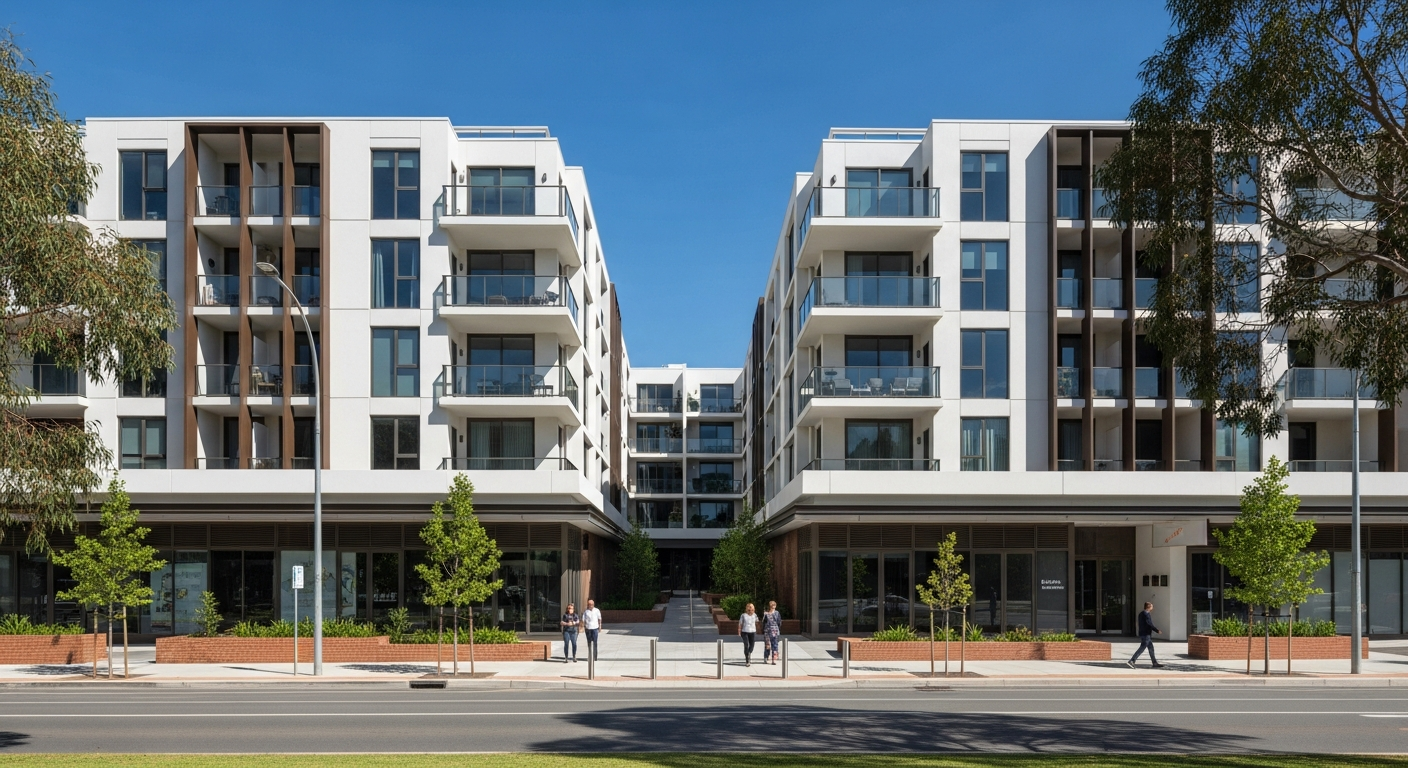
The 2026 Federal Budget introduced enhanced tax treatment for eligible build-to-rent developments: a 4% capital works deduction rate and a reduction in managed investment trust withholding tax from 30% to 15%. These are primarily structural incentives for institutional developers — but they have implications for individual investors accessing BTR through MIT structures.
Build-to-rent (BTR) is a residential property model in which the entire development is purpose-built for long-term rental — not for individual sale — and is managed as a single asset under professional institutional management. It is common across the United States, the United Kingdom, and parts of Europe, where it represents a mature and significant segment of the residential property market. In Australia, it is at an earlier stage of development, but it is growing rapidly, and it has received specific legislative support in the 2025-26 and 2026-27 Federal Budgets.
The tax incentives introduced for BTR are not a general benefit to all property investors. They are targeted incentives for eligible BTR developments — primarily large-scale, institutionally managed apartment projects meeting specific criteria. This guide explains what those incentives are, who qualifies, how individual investors can access BTR returns, and what the BTR model means for the broader housing market.
What Build-to-Rent Means in Practice
A BTR development is distinguished from a standard apartment development by one fundamental characteristic: the dwellings are never sold individually. The developer builds the entire asset, retains ownership of all units, and operates it as a single rental building under centralised management. Tenants rent directly from the operator, not from individual landlords.
This creates a different experience for tenants — longer lease terms, professional maintenance, on-site management, and amenities comparable to a hotel or serviced apartment building. It also creates a different financial structure for the owner: the return is entirely from rental income and eventual asset sale, with no presale revenue to fund construction. This is why BTR requires patient capital — institutional or superannuation fund investment — rather than the presale-funded model used by most Australian residential developers.
BTR developments in Australia as at 2026 are concentrated in the major cities, particularly Melbourne and Sydney, with a growing pipeline in Brisbane and Perth. Most are large-scale — 200 to 600 apartments — and are operated by specialist BTR platforms including Mirvac's LIV brand, Greystar (a US-based global BTR operator), and several superannuation-fund-backed structures.
The Capital Works Deduction Rate: From 2.5% to 4%
Under standard Australian tax law, the construction cost of a residential rental property can be deducted at 2.5% per annum over 40 years as a capital works deduction (Division 43 of the Income Tax Assessment Act 1997). This applies to the building structure itself — not to plant, equipment, or fixtures, which are depreciated separately under Division 40.
For eligible BTR developments, the Budget announced an increase in the Division 43 deduction rate from 2.5% to 4% per annum. At 4%, the construction cost is fully deducted over 25 years rather than 40 years. This accelerates the tax deduction for the BTR operator, improving the after-tax economics of the investment during the early years of the asset's life.
The enhanced rate applies to new BTR developments that meet the eligibility criteria: the development must comprise at least 50 dwellings; all dwellings must be made available for rent for a minimum of 10 years; the development must meet certain affordability requirements; and the operator must comply with enhanced tenancy conditions including minimum lease terms of at least 3 years where the tenant requests it. Full eligibility criteria are set out in Treasury legislation.
This is not a benefit available to individual landlords of residential investment properties. A private investor purchasing a single off-the-plan apartment retains the standard 2.5% Division 43 deduction. The 4% rate is specifically for qualifying institutional BTR developments.
Managed Investment Trust Withholding Tax: From 30% to 15%
Managed Investment Trusts (MITs) are a specific Australian investment vehicle used to pool capital from multiple investors — including foreign investors — and invest it in income-producing assets. MITs that hold residential property have historically been subject to a withholding tax rate of 30% on distributions to foreign investors, compared to 15% for MITs holding commercial property, agricultural land, or infrastructure.
The 2026 Budget announced a reduction in the MIT withholding tax rate for eligible BTR developments from 30% to 15%, aligning residential BTR with the treatment of commercial property. This is a significant change for the BTR sector because: most large-scale BTR platforms are structured as MITs or use MIT-compatible structures; a significant proportion of BTR investment capital comes from foreign institutional investors and sovereign wealth funds; and the 30% withholding tax made Australian residential BTR structurally uncompetitive compared to commercial property and compared to BTR markets in comparable jurisdictions overseas.
Reducing the withholding rate to 15% makes Australian BTR investable for offshore capital sources that were previously deterred by the tax treatment. This is expected to accelerate BTR development in Australia by unlocking institutional capital that has been on the sidelines.
What These Changes Mean for Individual Investors
The BTR tax incentives are primarily structural changes for institutional developers and MIT operators. Individual investors do not directly access the 4% Division 43 rate or the 15% MIT withholding change unless they are investing through a qualified MIT structure.
However, individual investors can access BTR returns through:
- Unlisted BTR funds — several Australian fund managers offer unlisted property funds with exposure to BTR assets. These are typically available to wholesale investors (those meeting the statutory tests for wholesale client status under the Corporations Act 2001) and to superannuation funds. They are not generally available to retail investors without appropriate licensing and disclosure
- Listed REITs with BTR exposure — several Australian Real Estate Investment Trusts (A-REITs) listed on the ASX have BTR assets in their portfolios. Investing in these provides indirect exposure to BTR income and growth
- SMSF investment — a self-managed superannuation fund may be able to invest in unlisted BTR funds or listed REITs, subject to the SMSF's investment strategy and trustee obligations
Direct BTR investment — purchasing a BTR development asset directly — is not a realistic pathway for most individual investors given the capital scale required (entire buildings, not individual apartments).
State-Level BTR Incentives
Several Australian states have introduced their own BTR incentive packages in addition to the federal measures:
Victoria introduced a land tax exemption for eligible BTR developments in 2023, providing a significant annual cost reduction for qualifying BTR operators. Victorian BTR projects must meet minimum scale and affordability requirements to access the exemption.
New South Wales introduced a 50% land tax concession for eligible BTR developments and has streamlined planning pathways for BTR projects in certain zones. The NSW Government has also committed to BTR-specific zoning provisions in its housing supply reforms.
Queensland has introduced BTR-supportive planning provisions in inner-city and transit corridor precincts, though as at mid-2026 it does not offer a land tax concession equivalent to Victoria or NSW. The Queensland Government has indicated ongoing policy development in this area.
BTR and the Broader Housing Supply Context
The Australian Government's support for BTR is fundamentally a housing supply policy, not a broad investor tax concession. The rationale is that BTR can add rental housing supply at scale — particularly in high-density urban areas — without adding to owner-occupier competition or to the pressures on established property markets.
BTR buildings are typically higher-density, professionally managed, and purpose-designed for long-term tenancy. If BTR capital is successfully attracted into the Australian market through the MIT withholding tax reduction and the enhanced Division 43 rate, the expected outcome is additional rental supply in major cities — which has implications for vacancy rates, rental growth, and the general residential market.
For investors in other asset classes, this is relevant context: a significant increase in professionally managed BTR supply in major urban areas could moderate rental growth in those markets over time, affecting the yield performance of existing residential investment properties in the same catchments.
Key Sources
- 2026–27 Federal Budget — build-to-rent tax incentives — budget.gov.au (announced 12 May 2026; now enacted as law)
- Treasury — managed investment trust and build-to-rent reforms — treasury.gov.au
- Income Tax Assessment Act 1997 (Cth) — Division 43 — legislation.gov.au (capital works deductions)
- State Revenue Office Victoria — BTR land tax exemption — sro.vic.gov.au
- Revenue NSW — BTR land tax concession — revenue.nsw.gov.au
- NHFIC — State of the Nation's Housing 2023–24 — nhfic.gov.au (BTR supply data and pipeline)