Atherton Tablelands Rates Crisis: What Rural Landowners Need to Know Before the Council Decides for Them
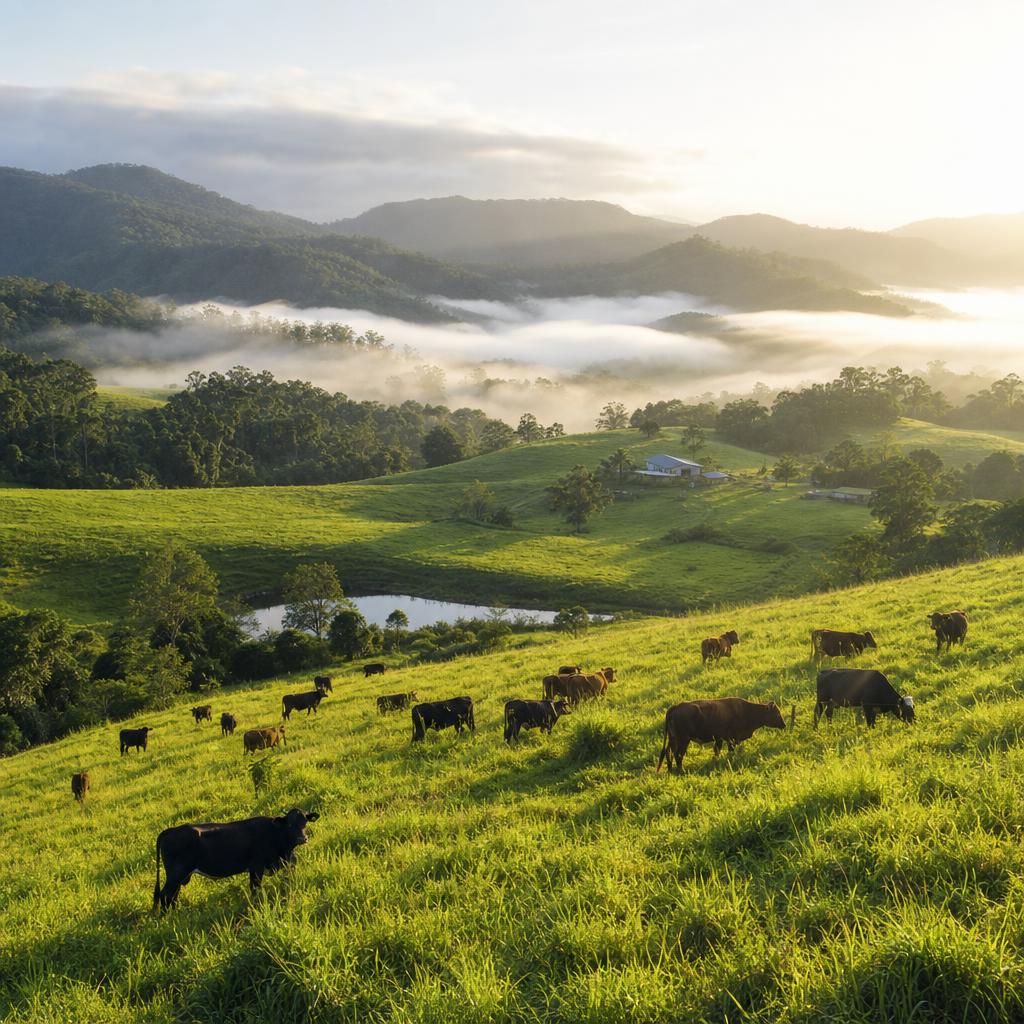
A significant land revaluation landed on the Atherton Tablelands in March 2026 — and the rate increases it triggers will appear in 2026-27 council notices. For rural landowners on fixed incomes, understanding what this means now, before the bills arrive, is the most useful thing you can do.
There is a pattern developing quietly across the Atherton Tablelands that warrants more attention than it is receiving. Rural landowners — many of them retirees on pension incomes, long-term farmers, or families who have held acreage for decades — are about to receive council rate notices that bear little resemblance to what they have paid in previous years. The revaluation that drives those increases landed in March 2026. The rate bills that reflect it begin arriving with the 2026-27 billing cycle.
The land itself, in many cases, is more valuable than it has ever been. That is precisely part of the challenge.
How the Rates Situation Developed
Tablelands Regional Council, like all Queensland councils, determines its annual rate levy by applying a rate-in-the-dollar to the unimproved value of land as assessed by the Queensland Valuer-General. When land values increase, rates follow — even if the council does not increase its base rate-in-the-dollar.
The 2026 Queensland land valuation program covered 15 local government areas. The Tablelands Regional Council revaluation was issued on 11 March 2026, based on market values as at 1 October 2025, and takes effect from 30 June 2026. The previous TRC revaluation was in 2023. The Valuer-General's figures for the Tablelands show the following movements since that prior cycle:
- Rural residential median: up approximately 28 percent ($230,000 to $295,000)
- Primary production (working farms): up approximately 6 percent — the smallest increase of any category
- Selected township localities: Kairi up 84 percent; Herberton up 61.5 percent; Malanda up 60 percent — though these reflect residential town blocks rather than rural holdings
Rates do not rise in direct proportion to valuations — councils adjust the rate-in-the-dollar, use three-year averaging, and may apply caps or hardship provisions. But for rural residential landowners, a 28 percent increase in assessed value will translate into a meaningful increase in rates, and for those in the township localities listed above, the movement is substantially larger. For landowners who purchased or inherited rural property before the recent demand surge, the revaluation creates a sharp disconnect: the assessed value of their land reflects what a motivated buyer would pay today, while their income reflects a pension, a part-time farming operation, or a fixed superannuation draw.
The rate notice is calculated against the former. The capacity to pay it comes from the latter.
The Rates Recovery Process — and What It Means for Landowners
Queensland's Local Government Regulation 2012 provides councils with a formal process for recovering unpaid rates. This process involves statutory notice periods and procedural requirements, and is designed as a last resort rather than a routine mechanism. Where rates remain unpaid through that process, the endpoint can be a council-administered sale — typically by public auction — with proceeds applied first to the outstanding debt and any surplus returned to the owner.
Council-administered auctions operate under different conditions from standard open-market sales. The buyer pool in a formal rates recovery sale tends toward investors and experienced property buyers who are familiar with the process, and competitive tension can be lower than in a private campaign. A landowner who reaches this point has also lost the ability to control timing, presentation, buyer selection, or settlement terms — all of which affect the final outcome.
This is not intended as a criticism of the council's processes, which exist within a clear legal framework. It is a practical observation: a landowner who acts early, through a considered private sale, retains options that are no longer available once formal recovery proceedings are underway.
The Current Market: What Rural Tablelands Property Is Worth
The same conditions that have driven land valuations upward have also produced a genuine buyer market for well-held rural property on the Tablelands. The active buyer profile for this type of property in mid-2026 includes:
- Southeast Queensland and interstate buyers seeking lifestyle acreage with reliable rainfall and proximity to Cairns infrastructure
- Farmers from southern states looking to expand into lower-cost productive land with strong water access
- Retirees seeking a rural property with manageable maintenance, often drawn by the Tablelands' climate and community
- Investors with an eye to agricultural land as a long-term asset class, particularly amid the broader conversation about food security and rural land scarcity
Current median sale prices for rural residential property in the Tablelands sit in the $500,000 to $520,000 range, with days on market typically between 28 and 32 days for correctly priced stock. Vacancy rates for rural holdings remain below one percent. The RBA's easing cycle from late 2025 has improved borrowing conditions for eligible buyers. The May 2026 federal changes to capital gains tax and negative gearing treatment have increased the relative attractiveness of direct property ownership for a segment of buyers who previously favoured other asset classes.
Insurance costs across Far North Queensland — a genuine structural issue for the region — remain elevated and are a legitimate factor in buyer due diligence, particularly for older improvements. This is a known variable in the market and does not, of itself, suppress demand for well-located rural holdings, but it is a factor in how buyers assess holding costs and should be addressed transparently in any sales campaign.
What Landowners Should Understand About Their Options
If you are a rural landowner on the Atherton Tablelands and you are concerned about how the 2026-27 rate notices will affect your financial position, the most important thing to understand is that you have choices — and those choices are most effective when exercised early.
Valuation objections: The formal objection window for the 2026 land valuation cycle was approximately 60 days from the issue date of 11 March 2026. That window has now closed. However, if you believe your property's assessed value did not reflect the characteristics or comparable sales relevant to your holding, noting this for future cycles — and keeping records of comparable evidence — is worthwhile. The Valuer-General's process is reassessed on each cycle.
Hardship provisions: Tablelands Regional Council, like most Queensland councils, maintains a rates hardship provision for landowners in genuine financial distress. These arrangements are available on request and worth exploring early — contact the council's rates department directly, in writing, well before any arrears accumulate.
Voluntary sale on your own terms: This is the option that preserves both maximum financial outcome and personal agency. A rural property listed properly in the current market — priced correctly, presented to the buyer profiles described above, and given appropriate exposure through national platforms and interstate buyer networks — has a strong likelihood of transacting at full value, with the timing and terms controlled by the landowner.
Landowners in this situation are encouraged to seek independent legal and financial advice before making any decision. A qualified local agent with rural property experience can also provide a current market assessment at no obligation — understanding what your property is worth in today's market is a useful starting point regardless of what you decide.
A Practical Note on Timing
The Tablelands market experiences its most active listing and buyer inquiry period between April and October — after the wet season and before the Christmas slowdown. Properties listed in this window benefit from the most concentrated buyer attention of the year, including the highest volume of interstate visitors who are also prospective buyers. A property listed outside this window is not unsaleable, but it operates with a smaller active pool.
For landowners who are weighing their options ahead of the 2026-27 billing cycle, understanding the current market now — before decisions become urgent — puts you in the strongest possible position.
Steinhardt Property & Business operates across Far North Queensland with specific experience in rural and acreage property. Tracy Steinhardt is a licensed Queensland real estate agent who works regularly with rural landowners across the Tablelands and surrounding regions. This article is general information only and does not constitute financial, legal, or taxation advice. Landowners with specific circumstances are encouraged to seek independent advice appropriate to their situation.
Sources: Tablelands Regional Council — Revenue Statement and Rates Information 2025-26 and 2026-27; Queensland Valuer-General — 2026 Land Valuation Program Summary (issued 11 March 2026); Local Government Regulation 2012 (Qld) — Part 12 Recovery of Rates; Real Estate Institute of Queensland — Regional Market Monitor 2025-26; CoreLogic Regional Market Data June 2026; Australian Bureau of Statistics — Internal Migration Data 2024-25.